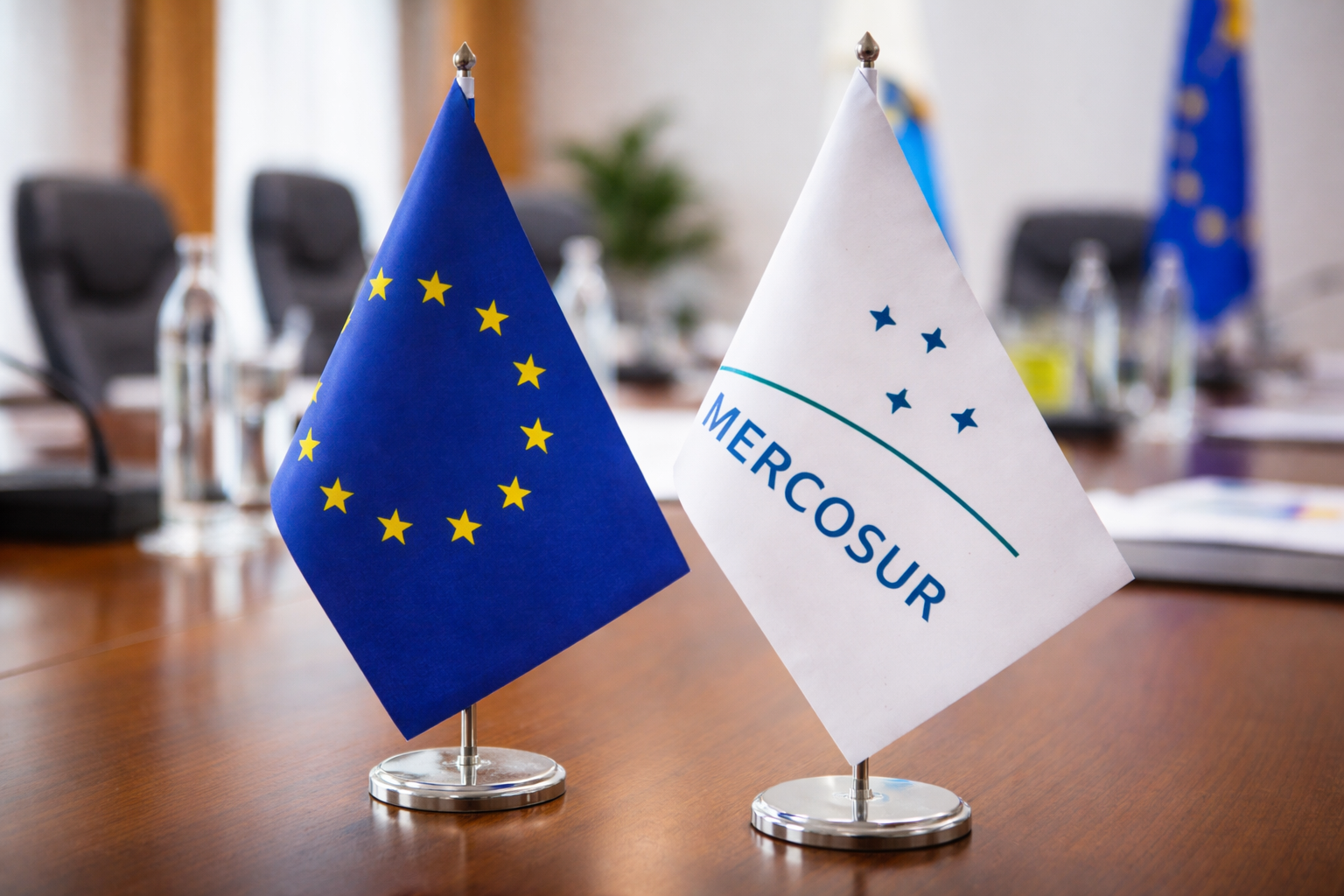
On 17 January 2026, the European Union (EU) and Mercosur formally signed their free trade agreement in Asunción, Paraguay. However, the treaty has not yet entered into force, given that the European Parliament did not ratify it.
At present, the process is on hold due to a range of legal and political obstacles, particularly on the European side, which have delayed its effective implementation. This is the first article in a series dedicated to the EU–Mercosur agreement, so be sure to follow the upcoming instalments, as this is a topic with a real and direct impact on your internationalization strategy.
What is this agreement?
The EU–Mercosur agreement is a comprehensive free trade treaty between:
- On the one hand, the European Union, which is an economic bloc of 27 Member States, and
- On the other hand, Mercosur, which is composed of Argentina, Brazil, Paraguay, and Uruguay.
If it enters into force, it will create one of the largest free trade areas in the world, covering more than 700 million consumers and accounting for nearly 25% of global GDP.
Key elements of the treaty
- Tariff reduction
The agreement provides for the gradual elimination of tariffs on around 90% of bilateral trade, facilitating mutual access to markets.
- Strategic sectoral exchange
- Mercosur would gain greater opportunities to export agricultural and agri-food products such as beef, soybeans, and sugar.
- The EU would strengthen its presence in industrial and technological sectors, including automobiles, machinery, chemicals, and advanced technology.
- Protection of geographical indications
The agreement establishes mechanisms to protect European geographical indications (such as wines, cheeses, and regional products), ensuring their recognition in South American markets.
- Safeguards and protection mechanisms
The treaty includes safeguard clauses allowing action to be taken in the event of serious imbalances in sensitive sectors, both in Europe and in Mercosur.
An agreement of mutual strategic interest
Beyond trade, it has a clear strategic dimension.
- For the European Union, this agreement supports the diversification of partnerships, reinforces multilateralism, and reduces dependencies in a global environment marked by trade tensions and protectionism.
- For Mercosur, it represents an opportunity to consolidate access to one of the world’s largest and most stable markets, attract investment, and strengthen its international integration.
In the context of growing economic integration between blocs, having a business presence in the European Union or in Mercosur enables companies to anticipate regulatory changes, optimize market access, and position themselves strategically for future trade agreements. Local presence facilitates regulatory adaptation, reduces operational barriers, and enhances international competitiveness.
Why is it not yet in force?
Although the text has been signed, its application requires:
- Ratification by the European Parliament.
- Approval by the national legislatures of the Mercosur countries.
Within the EU, ratification has been suspended following the European Parliament’s decision to request an opinion from the Court of Justice of the European Union on the agreement’s compatibility with EU treaties. This process may take several months and will delay its entry into force.
Conclusion
The EU–Mercosur agreement remains one of the most ambitious trade projects of recent decades. There is genuine and sustained interest on both sides, but its implementation will depend on the legal and political evolution of the ratification process.
While ratification remains on hold, companies and investors should adopt a cautious yet proactive strategy, analyzing opportunities, assessing risks, and preparing for different scenarios. In this context of uncertainty, the agreement continues to represent a long-term strategic opportunity, although its realization will depend on legal and political developments in the coming months.
Against this backdrop, Biznelp reaffirms its commitment to supporting companies in being present in these territories, facilitating the understanding of the regulatory and commercial environment, helping them anticipate change, and position themselves strategically.
If you would like to understand how this agreement could affect your business, get in touch with us.