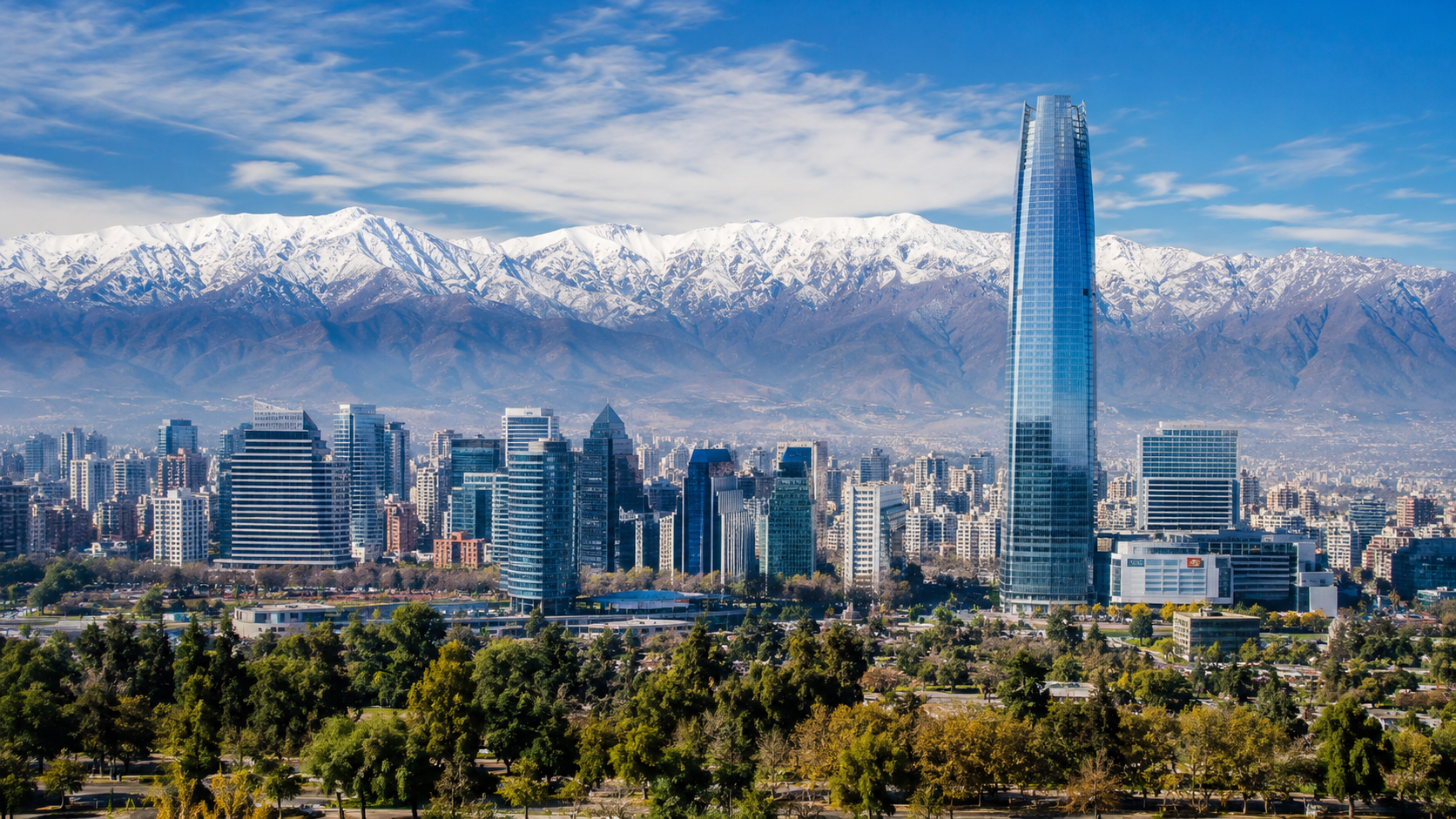
Chile has established itself as one of the most open and globally integrated economies in the world. Through a sustained trade liberalization strategy, the country has built an extensive network of international agreements that today position it as a strategic platform for global trade.
Currently, Chile has 36 active economic and trade agreements with 66 economies, allowing preferential access to markets representing nearly 89% of global GDP and more than 5.1 billion people.
Thanks to this network of trade agreements, both domestic and international companies can use Chile as a gateway to markets across the Americas, Europe, and Asia, benefiting from lower tariff barriers, clear regulations, and infrastructure designed to support international trade.
Chile’s Trade Liberalization Strategy
Since the early 1990s, Chile has pursued an economic policy focused on international integration and free trade. Unlike other countries in the region that adopted more protectionist models, Chile chose to strengthen bilateral and multilateral relations with the world’s leading economies.
This strategy has enabled the country to:
- Diversify its export markets.
- Reduce tariffs and trade barriers.
- Increase the competitiveness of Chilean companies.
- Attract foreign investment.
- Position itself as a commercial hub for Latin America.
As a result, according to the OECD, Chile now has one of the most extensive trade agreement networks in the world.
A Network of Agreements Connecting Chile to the World
Chile’s main commercial strength lies in its extensive network of international agreements. Some of the most significant include:
Free Trade Agreement with the United States
The FTA with the United States has significantly expanded Chilean exports to one of the world’s largest markets, particularly in sectors such as food, wine, services, and industrial products.
Trade Agreement with China
China is currently Chile’s main trading partner. The agreement between the two countries has strengthened exports of copper, lithium, fruit, wine, and seafood products.
Agreement with the European Union
The modernization of the agreement with the European Union has expanded opportunities for strategic sectors such as renewable energy, agriculture, mining, and technological services.
CPTPP or Comprehensive and Progressive Agreement for Trans-Pacific Partnership
Chile is also a member of the CPTPP, one of the most important trade agreements in the Asia-Pacific region. This treaty promotes economic integration, facilitates regional trade, and establishes modern rules in areas such as e-commerce, investment, and services.
Currently, CPTPP member countries represent approximately 14.7% of global GDP and 14.3% of global imports.
Stability and Confidence for International Investment
Another factor strengthening Chile’s position as a commercial platform is its institutional and macroeconomic stability.
The World Bank highlights Chile as a high-income country with a solid macroeconomic framework, an open trade regime, and a dynamic private sector.
These characteristics generate confidence among foreign investors and multinational companies seeking to establish regional operations from Chile.
Sectors such as mining, energy, logistics, financial services, technology, and retail have found in the country a favorable environment for expanding into other international markets.
Export Sectors Driving the Chilean Economy
Free trade agreements have been fundamental in boosting multiple Chilean industries.
Agribusiness and Food
Chile is one of the world’s leading exporters of fresh fruit, wine, and salmon. Trade agreements have helped reduce entry barriers and increase the competitiveness of these products in international markets.
Mining and Strategic Resources
Copper remains Chile’s main export product, but the country has also positioned itself as a key player in lithium and strategic minerals linked to the global energy transition.
Services and Technology
The digital economy and technological services have gained importance in recent years thanks to international connectivity and the new digital trade rules incorporated into modern agreements.
Renewable Energy
Chile aims to become a regional leader in green hydrogen and clean energy, leveraging its export capacity and international trade relations.
A Model Focused on International Growth
Chile’s free trade policy has not only boosted exports. It has also enabled the diversification of markets, modernization of productive sectors, and greater global economic integration.
In 2023, Chile’s trade in goods and services with the world exceeded US$180 billion, equivalent to approximately 61% of the country’s GDP.
In addition, recent reports show that Chilean exports continue to grow, driven mainly by international demand for minerals, food products, and agricultural goods.
Conclusion
Chile has successfully built a privileged position in international trade thanks to decades of economic openness and a strong network of free trade agreements.
Its preferential access to the world’s main markets, combined with institutional stability, modern infrastructure, and an export-oriented economy, make it a strategic platform for companies seeking global expansion.
At a time when economic integration and international connectivity are becoming increasingly important, Chile continues to consolidate its position as one of Latin America’s leading commercial hubs.
At Biznelp, we experience this reality firsthand from Chile and work closely with companies looking to expand and take advantage of international trade opportunities.
Interested in learning how Chile can become your next strategic market? Contact us with no obligation, we’d be happy to talk.